Hoop iron is a flat strip of galvanised steel built into the brickwork near the top of a wall and then wrapped over the wall plate and nailed to each roof truss. Its job is to tie the roof down to the walls so wind cannot lift it off. SANS 10400 requires every timber roof to be tied down this way, using hoop iron straps or galvanised wire. When the hoop iron is left out, too short, or rusted through, the roof is held on by little more than its own weight and a few nails, and in a Cape Town south-easter that is not enough. Rusting hoop iron and brickforce also crack the wall around them. This guide explains how it works and what to look for.
What Hoop Iron Is
Hoop iron is a plain galvanised steel strap, around 30 mm wide and 1.2 mm to 1.6 mm thick, sold in rolls. While the bricklayer builds the top courses of the wall, lengths of hoop iron are laid into the mortar joints with the ends left hanging out of the top of the wall. When the roof goes on, those ends are pulled up over the wall plate and the truss and nailed off.
Plain hoop iron has no pre-punched holes; the roofer nails straight through it. Pre-punched straps are also sold and do the same job. What matters is that the strap is the right size, is built deep enough into the wall and is nailed with enough nails.
Hoop iron is also used to tie brick walls to concrete columns, fixed to the column at intervals of no more than 450 mm, and to tie new walls into old ones.
What the Regulations Say About Hoop Iron and Roof Tie-Down
SANS 10400 Part L says roof trusses and rafters must be tied down to the supporting walls with galvanised steel straps or galvanised steel wires built into the walls. Part K sets out the detail. It allows three types of roof anchor:
- Type A: two strands of 2.4 mm galvanised steel wire.
- Type B: a 30 mm by 1.2 mm galvanised steel strap.
- Type C: a 30 mm by 1.6 mm galvanised steel strap.
Which one is allowed depends on the roof. For heavy roofs (concrete tiles, clay tiles, slate or thatch) at normal pitches, the wire anchor is acceptable. For light roofs (metal sheeting, metal tiles or fibre-cement), wire is only allowed if the trusses are no more than 760 mm apart. Wider spacings need a strap, and at 1,350 mm spacing only the heavier Type C strap will do.
How Deep Hoop Iron Goes Into the Wall
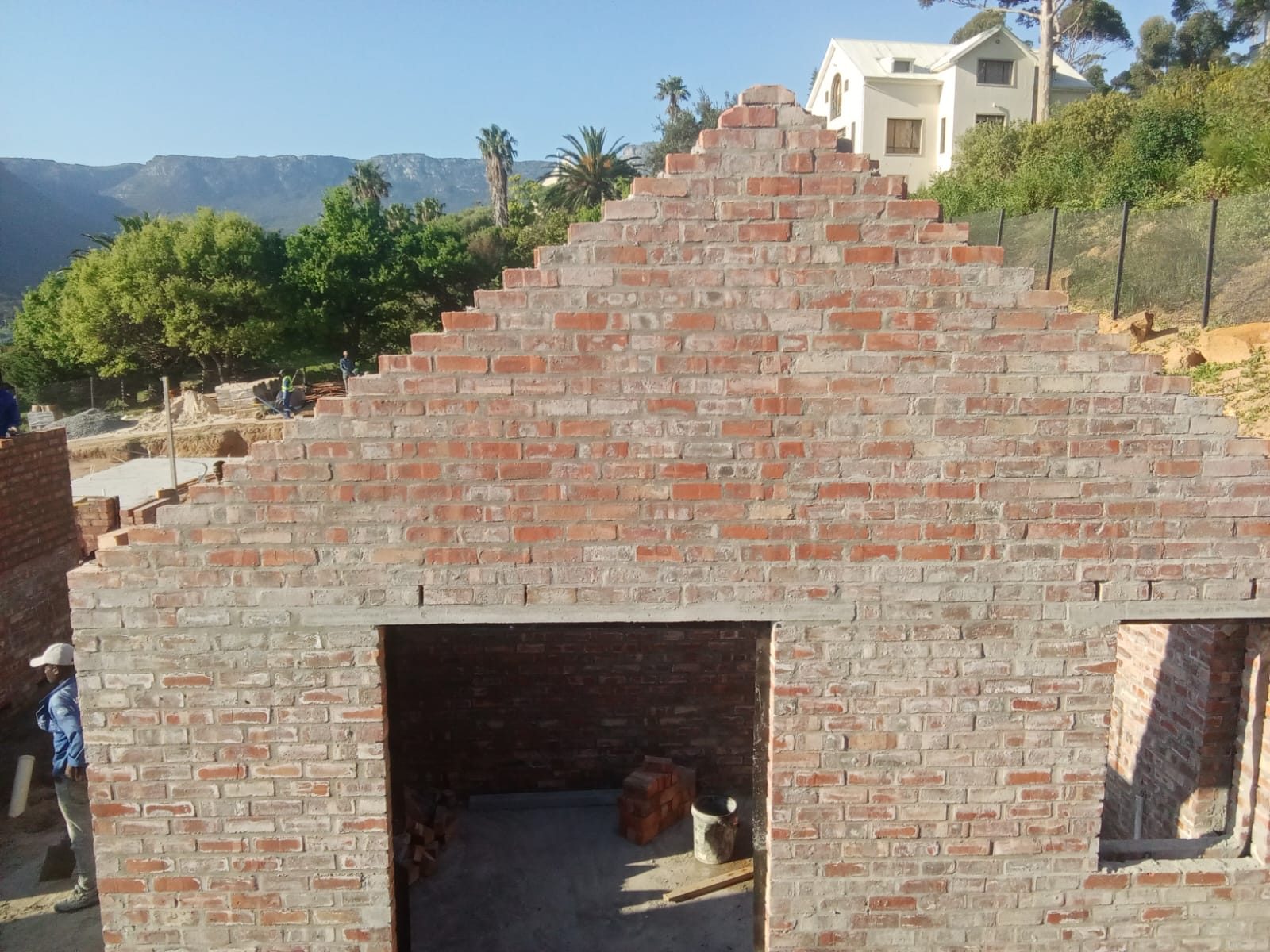
This is the part people do not expect. A strap nailed to the top course alone does nothing, because the wind would simply lift the top bricks off with the roof. The anchor has to be built far enough down to hold the weight of brickwork above it. Part K sets these minimum depths for walls of solid bricks:
| Roof type | Minimum anchor depth in solid brickwork |
|---|---|
| Heavy roof (tiles, slate, thatch) | 300 mm |
| Light roof (sheeting, metal tiles) | 600 mm |
Hollow blocks need 400 mm for heavy roofs and 600 mm (sometimes 1,000 mm) for light roofs. The strap must be bedded at least 70 mm into the mortar of each bed joint it runs through. At the top, the regulations’ holding-down detail calls for at least four 32 mm clout nails for a heavy tiled roof, or eight for a light sheeted roof, or three 75 mm nails.
Light roofs need deeper anchors because there is less roof weight pressing down to resist the wind. That is why a sheeted roof that blows off often takes the top few courses of bricks with it.

Why Roof Tie-Down Matters in Cape Town
Cape Town gets wind from two directions. In winter, cold fronts arrive with north-westerly gales and rain. In summer the south-easter can blow for days, and the City says it can reach about 100 km/h. Wind flowing over a roof creates suction, and on the edges, eaves and gable ends that suction is strong. A properly tied roof resists it through the hoop iron, down into the weight of the walls. Without the ties, everything depends on the nails holding the wall plate to the top of the wall.
Gable roofs and wide overhangs, such as patio roofs and carports attached to the house, are the most exposed. So are homes on ridges and slopes and on the windward side of the mountain.
What Goes Wrong When Hoop Iron Is Left Out
Missing tie-downs are more common than they should be, especially on old outbuildings, DIY patio roofs and some extensions. The signs are:
- A crack along the line where the ceiling meets the wall, which opens and closes with the wind.
- A horizontal crack in the outside plaster just under the eaves.
- The wall plate visibly moved or lifted off the brickwork.
- Roof sheets or a whole section of roof lifting in a storm.
Not every ceiling-line crack means the roof is loose. Timber shrinking and normal movement cause cracks there too. Our article on cracks in walls covers how to tell the difference.
What Happens When Hoop Iron Rusts
Galvanising slows rust down, but it does not stop it forever. Near the sea, and anywhere water gets into the top of the wall through a leaking gutter or a failed roof, hoop iron eventually corrodes. Rust takes up several times the space of the steel it came from, so as it forms in the mortar joint it pushes the bricks apart. You get a horizontal crack running along a bed joint near the top of the wall, often with brown staining. Once the strap has rusted through, the roof is no longer tied down at that point, even if it looks fine from the outside.
Part K takes corrosion seriously. It calls for heavier galvanising on wall ties within 30 km of the coast, pre-galvanised brickforce with a heavier coating within 1 km of the coastline, and stainless steel in tidal and splash zones. All of Cape Town lies within that 30 km strip, and seaside suburbs such as Sea Point, Muizenberg and Fish Hoek sit within 1 km of the shoreline.
Hoop Iron vs Brickforce
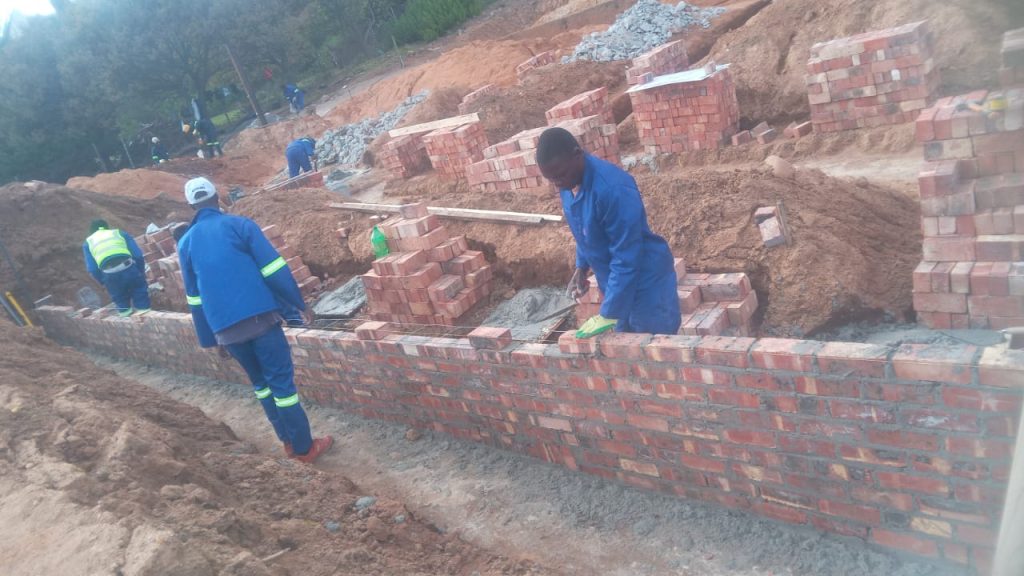
People often mix up the two. Brickforce is a light welded steel mesh: two parallel wires between 2.8 mm and 3.55 mm thick joined by cross wires, in a ladder or truss pattern. It is laid flat in the mortar joints along the length of the wall. Hoop iron ties the roof down. Brickforce holds the wall together.
Brickforce helps the wall resist cracking from movement and shrinkage, lets control joints be spaced further apart, and is used above window and door openings as lintel reinforcement. Like hoop iron, it rusts when the wall stays wet, and rusting brickforce causes the same kind of horizontal cracking at regular intervals up the wall.
Fixing Missing or Rusted Hoop Iron
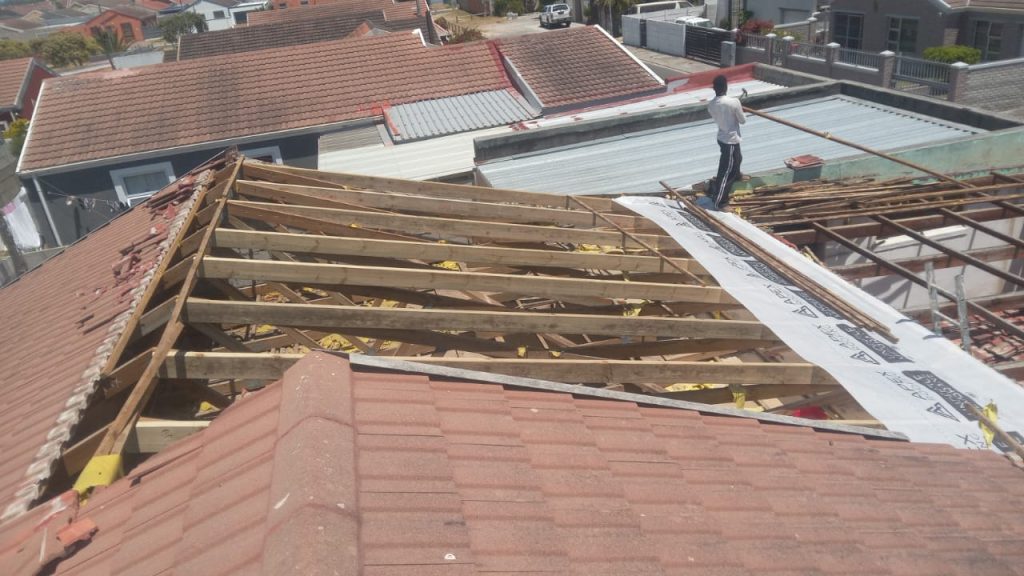
You cannot easily slide a new strap into an old wall. Where the roof is coming off for a re-roof, we expose the wall plate and trusses, check every tie-down, and replace corroded or missing ones. On an existing roof, there are retrofit anchors and galvanised straps fixed into the wall at the depth needed, but the detail should be checked by a structural engineer, especially on light sheeted roofs, wide spans or exposed sites. Where rust has cracked the top courses, those bricks need to be taken out and rebuilt with new ties.
Always fix the water source too. Rust starts where water gets in, usually a blocked gutter, a leaking valley or a cracked parapet capping. Our guides to preventing winter roof leaks and our waterproofing services cover that side. If you are worried about how your roof is fixed down, request an inspection through our quote page.
Hoop Iron: Frequently Asked Questions
Is hoop iron a legal requirement?
Yes. SANS 10400 requires timber roof trusses and rafters to be tied down to the walls with galvanised steel straps (hoop iron) or galvanised wire built into the brickwork.
Can wire be used instead of hoop iron?
Two strands of 2.4 mm galvanised wire are allowed on heavy tiled roofs. On light sheeted roofs, wire is only allowed if the trusses are 760 mm apart or closer, which is unusual.
How far down should hoop iron go into the wall?
In solid brickwork, at least 300 mm for a tiled roof and at least 600 mm for a sheeted roof.
What is the difference between hoop iron and brickforce?
Hoop iron is a strap that ties the roof down to the wall. Brickforce is a wire mesh laid along the mortar joints to reinforce the wall itself.
Why are there horizontal cracks near the top of my wall?
One common cause is rusting hoop iron or brickforce pushing the mortar joint apart. Roof movement and shrinkage are others. It is worth having it checked.