Flat roof waterproofing in Cape Town is usually done with one of three systems: torch-on bitumen membrane, liquid or acrylic waterproofing reinforced with a membrane fabric, or a cementitious or polyurethane coating. Installed properly on a roof with a good fall to its outlets, torch-on commonly lasts around 10 to 20 years and liquid systems around 5 to 15 years, depending on the product, sun exposure and maintenance. In this climate, most failures are not caused by the product itself. They come from ponding water, blocked outlets, poor detailing at parapets and upstands, and no maintenance after the first winter. This guide explains the options, how long each lasts, how to look after a flat roof, and the signs that the waterproofing is failing. For prices, see our separate guide to waterproofing costs in Cape Town.
Why Flat Roof Waterproofing Matters in Cape Town
Flat concrete roofs are common on Cape Town homes built from the 1960s onwards, on modern additions, garages, balconies and patio roofs. They are not truly flat. They rely on a gentle slope to move water to outlets or the roof edge, and a waterproof layer to stop it soaking into the slab.
Our weather is hard on that layer. Long spells of wind-driven winter rain from May to September test every joint and seam. Summer brings strong UV and hot days that dry out and crack membranes and coatings. Coastal suburbs add salt, and the southeaster blows sand and leaves into outlets. A flat roof here needs to handle all of that, year after year.
Flat Roof Waterproofing Options
Torch-on membrane waterproofing
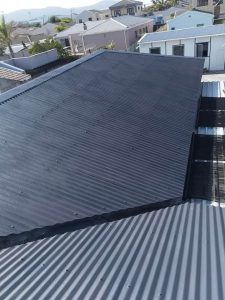
Torch-on is a roll of modified bitumen membrane, usually 3 mm or 4 mm thick, melted onto a primed surface with a gas torch. The seams are overlapped and fused, and the membrane is turned up the parapets and into the outlets. It is then painted with a reflective aluminium or UV-resistant coating, or covered with stone chips, to protect it from the sun.
- Good for: concrete flat roofs, large areas, roofs with modest foot traffic.
- Watch for: it needs skilled installers, because poor torching leaves weak seams. The UV coating needs renewing every few years.
Liquid and acrylic flat roof waterproofing
Liquid systems are brushed or rolled on in several coats, with a polyester or fibreglass reinforcing fabric bedded into the first coats. Once cured, they form a continuous skin without joints that follows the shape of the roof.
- Good for: roofs with lots of pipes, vents and awkward details; small roofs; overcoating sound older systems.
- Watch for: thickness matters. Too few coats and the system wears out quickly. Most acrylic systems need recoating periodically.
Polyurethane and cementitious coatings
Polyurethane coatings are tougher and more elastic than standard acrylics and handle foot traffic better. Cementitious coatings are used mainly under tiles, on balconies and in wet areas rather than as an exposed roof finish.
Which flat roof waterproofing option is best?
There is no single best product. On a large concrete roof with simple details, torch-on is usually a strong choice. On a small roof with lots of penetrations, or as an overlay on a sound existing system, a reinforced liquid system often makes more sense. On a balcony or roof terrace that will be tiled, the waterproofing goes under the tiles and must be designed with the screed and outlets. We choose the system after seeing the roof, not before.
How Long Does Flat Roof Waterproofing Last?
South African installers quote a wide range, mainly because so much depends on the installation and upkeep. Here is a fair guide to realistic lifespans in Cape Town conditions:
| Flat roof waterproofing system | Typical lifespan with maintenance | Main maintenance task |
|---|---|---|
| Single-layer torch-on (3 mm or 4 mm) | 10 to 20 years | Renew the reflective UV coating every few years |
| Two-layer torch-on | 15 to 25 years | Renew UV coating, check seams and upstands |
| Reinforced acrylic or liquid system | 5 to 15 years | Recoat before the surface wears through |
| Polyurethane coating | 10 to 15 years | Inspect and recoat worn traffic areas |
The top of each range needs three things: good preparation before installation, a roof that drains properly, and regular maintenance. Without them, a system can fail in a few years.
Fall and Drainage on a Flat Roof
A flat roof that holds water will wear out its waterproofing much sooner. Standing water breaks down coatings, gets into any small defect and adds weight. SANS 10400 Part L, the National Building Regulations standard for roofs, requires flat roofs to have a fall of not less than 1:80 towards gutters, outlets or roof edges where the flow of water is uninterrupted, and 1:50 where the flow is interrupted.
Many older roofs were never screeded to those falls, or have sagged over time. If your roof has puddles that stay for a day or more after rain, new waterproofing alone will not solve the problem. The falls may need correcting with a screed first, and outlets may need to be enlarged or added.
Flat Roof Waterproofing Maintenance
A little maintenance makes a big difference to how long a flat roof lasts. Our recommended routine:
- Before winter (March or April): clear leaves, sand and debris from the roof, outlets and gutters. Check that water can flow freely into downpipes.
- After big storms: look for new puddles, lifted edges and debris in outlets.
- Every year: walk the roof or have it inspected. Look at seams, upstands, the junction with parapet walls and around pipes and vents.
- Every few years: renew the reflective coating on torch-on, or recoat liquid systems before they wear through.
- Always: keep foot traffic, pot plants, geyser installers and satellite dish brackets away from the membrane unless it is protected.
Pitched roofs need different care. Our guide to preventing roof leaks before winter covers both roof types.
Signs Your Flat Roof Waterproofing Is Failing
Catch these early and a repair is often enough. Leave them and water gets into the slab, and the repair gets bigger.
Signs on the flat roof itself
- Blisters or bubbles in the membrane or coating.
- Cracks, splits or crazing in the surface.
- Lifted or open seams on torch-on.
- The reflective coating worn away so black bitumen shows through.
- Membrane pulling away from parapet walls or upstands.
- Ponding water that stays after rain.
- Plants or moss growing in joints or outlets.
Signs inside the house
- Brown water stains or damp patches on ceilings.
- Bubbling or peeling paint at the top of walls.
- Rust stains or concrete spalling on the underside of the slab.
- Musty smells or mould in rooms under the roof.
- Damp on walls below parapets, which often points to the parapet coping or upstand.
Not every damp patch comes from the roof. Water can also get in through walls, window frames or the ground. Our guides on rising damp and why roof leaks keep coming back help you tell the difference.

Repair or Redo Your Flat Roof Waterproofing?
If the problem is local, such as one lifted seam, a split near an outlet or a failed upstand, a targeted repair is often enough. If the membrane is blistered over large areas, brittle, or has been patched many times, it is usually better to strip it and start again. Laying new waterproofing over a failed system can trap water and hide problems. We decide after testing how well the existing layer is stuck down and checking the slab underneath.
Flat Roof Waterproofing: Common Questions
What is the best flat roof waterproofing in Cape Town?
Torch-on is a strong choice for many concrete flat roofs. Reinforced liquid systems suit roofs with many penetrations or small areas. The right choice depends on the roof, its falls and how it is used.
How long does flat roof waterproofing last?
With good installation and maintenance, torch-on commonly lasts around 10 to 20 years and liquid systems around 5 to 15 years in Cape Town conditions.
Can you waterproof a flat roof over the old waterproofing?
Sometimes. If the old layer is still well bonded and sound, an overlay can work. If it is blistered, loose or holding water, it should be removed first.
How often should a flat roof be inspected?
At least once a year, ideally before winter, and after any major storm.
Our team waterproofs flat roofs, parapets and balconies across Cape Town using torch-on and liquid systems. See our waterproofing services, check prices in our waterproofing cost guide, or ask for a roof inspection through the quote page.