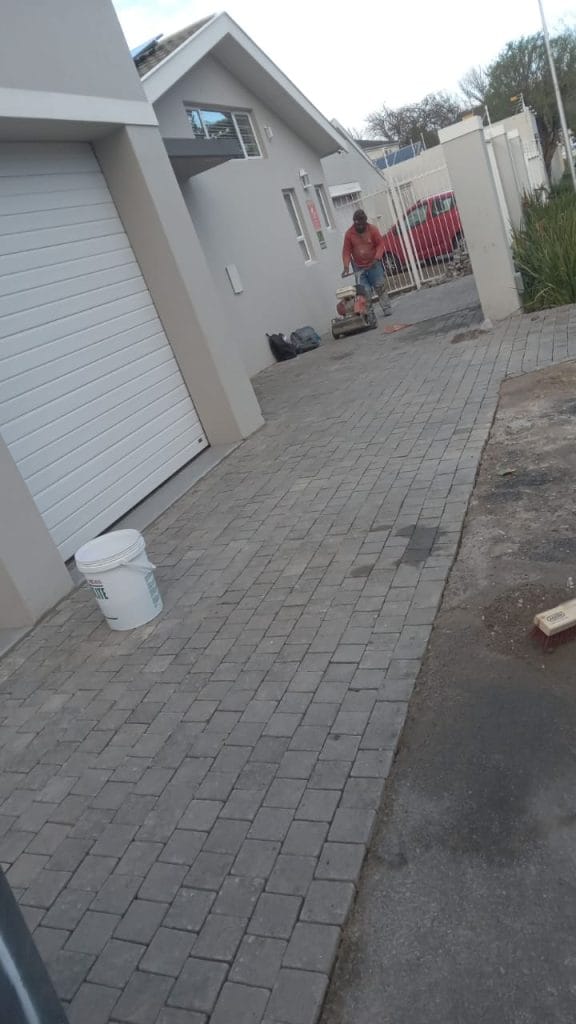
In Cape Town in 2026, paving supplied and laid usually costs between R300 and R800 per square metre. Plain cement pavers on a flat, easy site sit at the bottom of that range, clay brick and cobble pavers sit near the top, and natural stone can go well past R1,000 per m². Driveways cost more per m² than patios because they need a deeper, stronger base. The figures in this guide are estimates drawn from several South African price guides and supplier lists, checked against the kind of work we quote. Your actual price depends on your site, so treat them as a budgeting tool, not a quote.
Paving Cost per Square Metre in Cape Town: 2026 Price Table
These are rough installed rates for residential paving in greater Cape Town. Installed means excavation, a compacted base, bedding sand, the pavers, laying, cutting and edging are all included.
| Paving type | Typical use | Estimated cost per m² (supplied and laid) |
|---|---|---|
| Cement or concrete pavers | Patios, paths, side passages | R300 to R550 |
| Interlocking concrete pavers | Driveways, parking areas | R400 to R700 |
| Clay brick pavers | Driveways, patios, pool surrounds | R500 to R800 |
| Tumbled or cobble-style pavers | Feature patios, entrances | R500 to R850 |
| Natural stone or cast stone slabs | Premium patios and entrances | R850 to R1,500 or more |
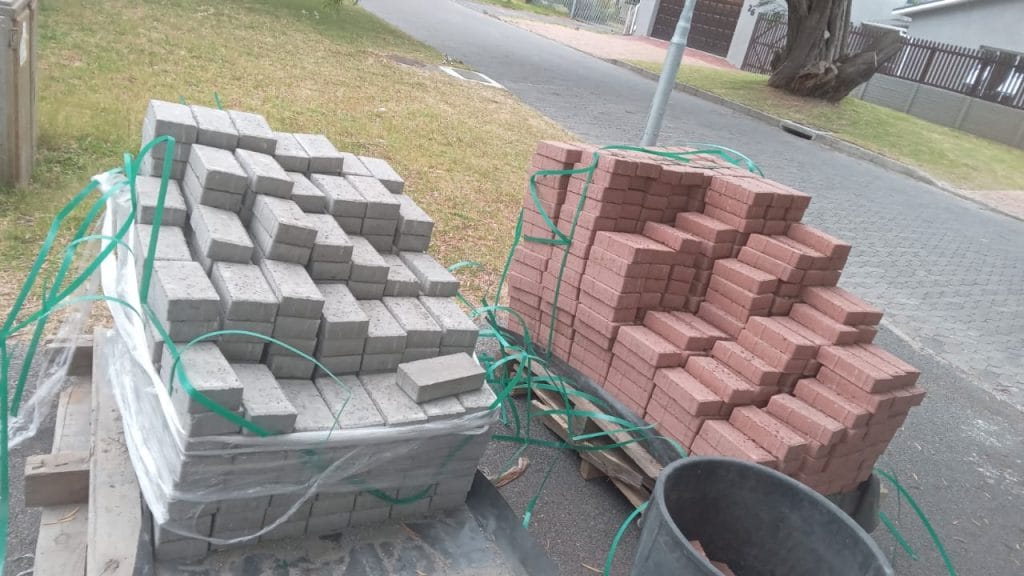
If you only want the pavers delivered, supply-only prices are much lower. Western Cape suppliers list plain concrete and interlocking pavers from roughly R115 to R250 per m², and large smooth slabs from about R200 per m². Laying labour on its own, on a base someone has already prepared, is roughly R100 to R200 per m². Add excavation, base work and edging and the labour part climbs to roughly R200 to R370 per m².
What a Paving Quote Should Include
Two quotes for “40 m² of paving” can be thousands of rand apart and both be fair. The difference is usually in what sits under the pavers. A proper installed price in Cape Town should cover:
- Excavation to the right depth, and removing the soil, lawn or old surface from site.
- A compacted base layer of G5 or similar crushed stone, compacted in layers with a plate compactor.
- Bedding sand screeded to the correct levels and falls.
- The pavers, including allowance for cuts and breakage.
- Edge restraints, usually a concrete-bedded kerb or soldier course, so the paving cannot creep outwards.
- Jointing sand brushed in and a final compaction.
Quotes that skip the base or the edging look cheap on paper. They are also the paving jobs that sink, rut and spread within a few winters, and the only real fix is to lift everything and start again.
What Drives Paving Cost in Cape Town
Driveway or patio paving
A patio carries feet and furniture. A driveway carries cars, delivery vans and the occasional bakkie loaded with sand. That needs a deeper, better compacted base and usually a 60 mm or 80 mm interlocking paver instead of a 50 mm one. Expect a driveway to cost R100 to R200 more per m² than a patio in the same paver.
Ground conditions under the paving
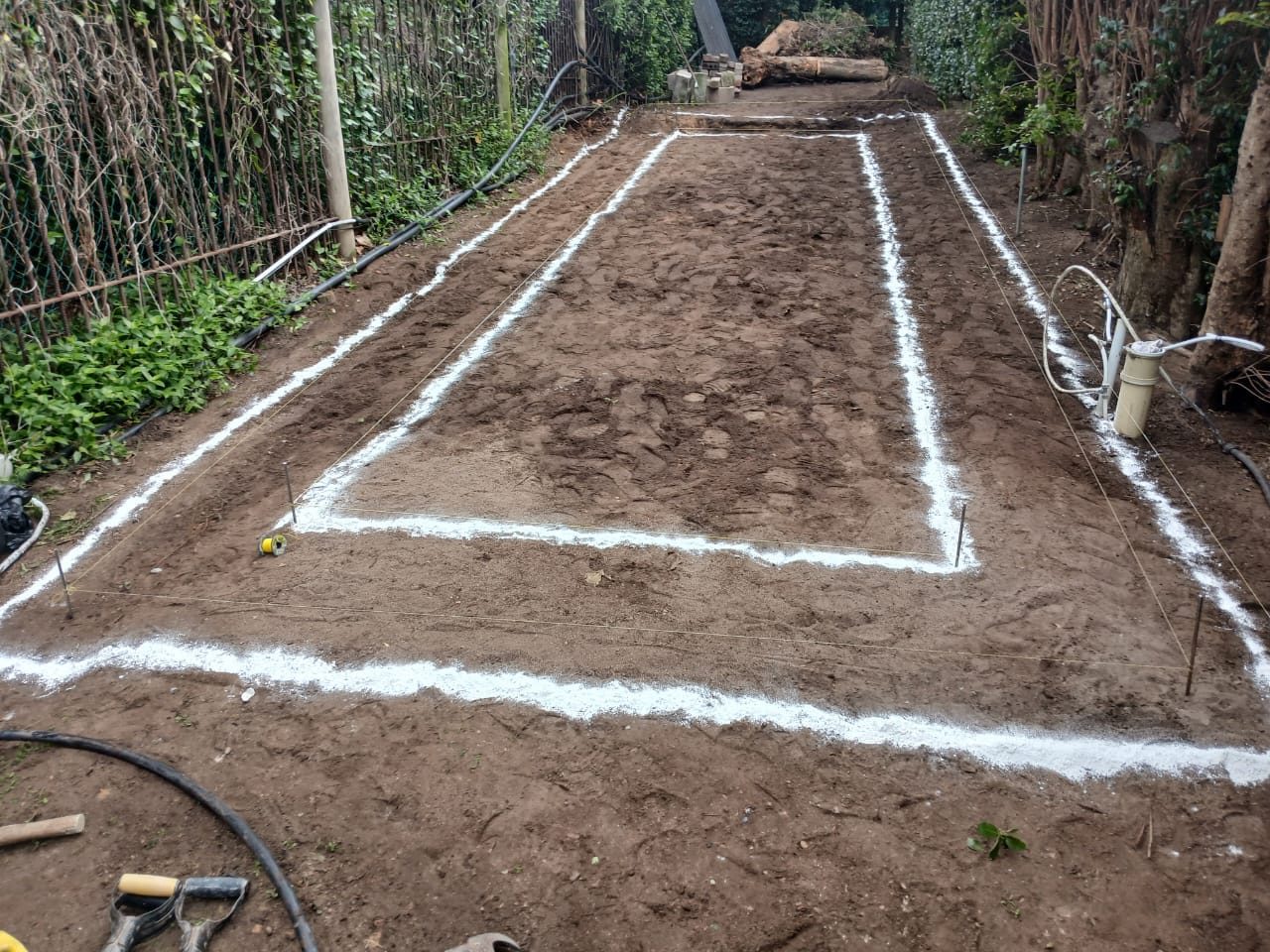
Cape Town soils vary a lot from suburb to suburb. Sandy ground on the Cape Flats and along the False Bay coast drains well but needs careful compaction. Clay soils in parts of the northern suburbs swell in winter and shrink in summer, which can lift or sink paving that was laid on a thin base. Soft ground, old building rubble or tree roots all mean more excavation and more base material.
Slope, levels and drainage
Paving must fall away from the house so rainwater does not run towards the walls. On a sloping site that can mean steps, a small retaining edge or channel drains, and each adds cost. Levels matter for another reason too. Paving should finish at least 150 mm below the damp-proof course of your walls, and must never cover weep holes. Our guide to weep holes in cavity walls explains why raised paving is a common cause of damp.
Pattern and cutting
A simple stretcher bond is the quickest to lay. Herringbone, basket weave, circles and curved edges need far more cutting, and cutting is slow, dusty work. A curved driveway in herringbone takes noticeably longer to lay than the same area laid straight, and that time shows up in the price.
Site access and removal of old surfaces
If we can get a truck onto your property, base material and pavers go straight where they are needed. If everything has to come through a narrow side passage in wheelbarrows, labour goes up. Breaking out an old concrete slab or lifting failed paving, and carting the rubble away, is usually priced as a separate line.
Size of the job
Setup costs are similar for a 10 m² path and a 60 m² driveway. Small jobs therefore cost more per m², and many contractors have a minimum charge.
Worked Example: Paving Cost for a Cape Town Driveway
Here is how the numbers might come together for a typical job. It is an illustration only.
A homeowner wants to replace a cracked strip driveway and a patch of lawn with a 40 m² paved driveway. The site is fairly flat with good truck access. They choose a grey 60 mm interlocking paver in a herringbone pattern, with a soldier course edge.
- Breaking out the old concrete strips and removing rubble: priced separately, often a few thousand rand depending on the volume.
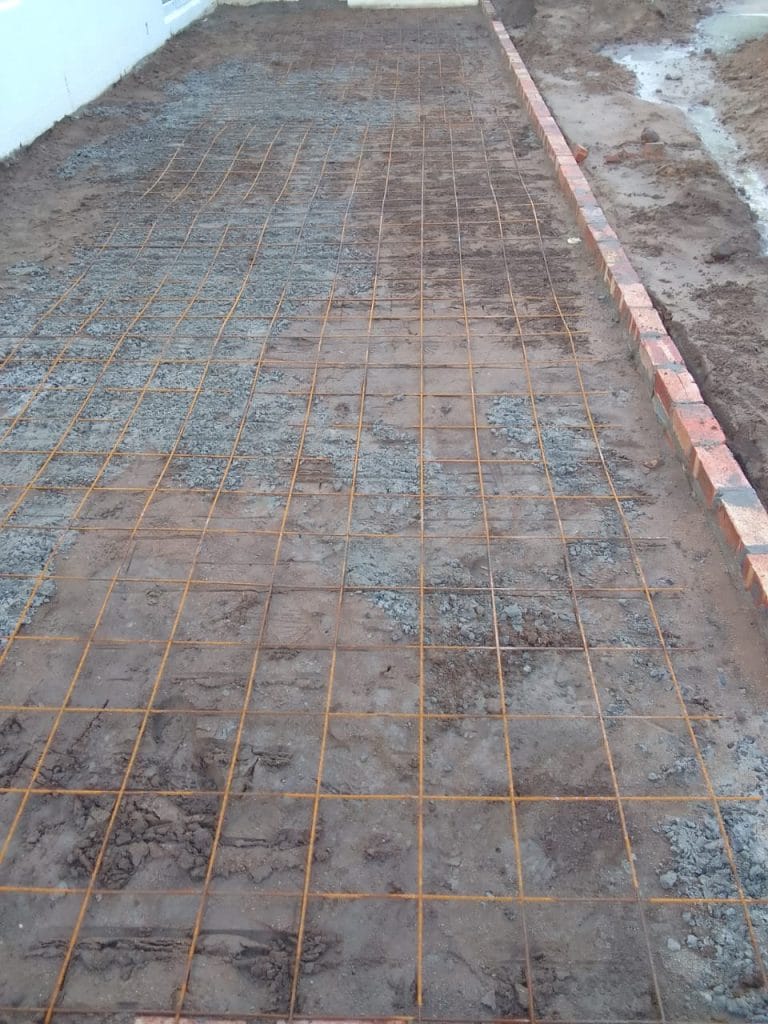
- Excavation, G5 base compacted in layers, bedding sand, pavers, laying, cutting and edging: 40 m² at R450 to R650 per m² = R18,000 to R26,000.
- A channel drain across the bottom of the driveway to catch runoff from the street: an extra cost if needed.
So a realistic budget would be in the region of R22,000 to R32,000 once removal and small extras are added. Choose clay brick pavers instead and the paving line alone could move to roughly R20,000 to R32,000. A 24 m² back patio in cement pavers on the same property would come in at roughly R7,500 to R13,000.
Paving Cost Compared With Other Driveway Options
Paving is not the only way to surface a driveway. Gravel is the cheapest upfront but needs topping up and does not suit steep driveways. Concrete and tar can cost more per m² and are harder to repair neatly. Paving sits in the middle on price, and its big advantage is that individual pavers can be lifted and relaid if a pipe needs fixing or a section sinks. We compare the options properly in paving vs concrete driveways in Cape Town.
How to Keep Your Paving Cost Under Control
- Keep the layout simple. Straight edges and a stretcher or herringbone pattern without lots of curves keep cutting down.
- Do it all at once. Doing the driveway, paths and patio in one job spreads setup costs.
- Do not cut the base. If you need to save, choose a cheaper paver, not a thinner base.
- Sort drainage first. Fixing water problems after the paving is down costs far more.
- Compare like with like. Ask every contractor to state the base thickness, base material, paver thickness and edging in writing.
Good paving also adds kerb appeal and practical value. Our article on home improvements that add value covers where it fits among other upgrades.
Paving Cost Cape Town: Common Questions
How much does paving cost per square metre in Cape Town?
As an estimate, most residential paving in Cape Town costs R300 to R800 per m² supplied and laid in 2026. Cement pavers on a patio are at the low end, clay brick and cobble pavers on a driveway at the high end, and natural stone can exceed R1,000 per m².
Why does driveway paving cost more than patio paving?
A driveway needs a deeper and better compacted base, and usually a thicker interlocking paver, to carry vehicle loads without rutting. That adds material and labour, typically R100 to R200 per m² over a patio.
Is it cheaper to buy pavers myself?
Sometimes, but the pavers are only part of the cost. The base, labour and edging make up most of an installed price, and if you supply the pavers the contractor may not take responsibility for breakages or colour variation.
How long does paving last in Cape Town?
Well-laid paving on a proper base can last for decades. Most early failures come from a thin base, no edge restraints or poor drainage, not from the pavers themselves.
Do I need plans approved by the City for paving?
Paving a driveway or patio on your own property does not usually need building plans. If the job includes a retaining wall, a boundary wall or changes to stormwater, check first. Our guide on building plans approval explains when plans are needed.
If you would like a firm price for your driveway, path or patio, our team will come out, measure up and look at the ground and levels before we price anything. See our paving services or request a site visit through the quote page.