
A skilled plumber interview saves many projects. In Cape Town renovations, most delays and leaks are not from one failure, they are from misunderstood expectations.
Why pre-questions matter
Water and wastewater systems cross through several structural layers. A conversation before works start should establish exact routes, pressure expectations, lead times, and cleanup standards.
Core questions every owner should ask
1) What is your inspection process?
Ask for a full pre-site inspection of pipe age, pipe diameter, pressure loss, and known weak points.
2) How do you handle concealed leaks?
A contractor should describe how they locate, isolate, and repair concealed faults, and what testing method is used.
3) What is your lead time for fittings and fixtures?
Lead times in Cape Town vary with stock and supplier routes. Confirm availability before scheduling rough-ins.
4) Can you integrate with my extension or roof timeline?
Synchronise trenching, wall opening, and floor curing with other trades to avoid delays.
5) How will waste water pressure be managed during replacement?
Large projects need temporary pressure and drainage continuity planning.
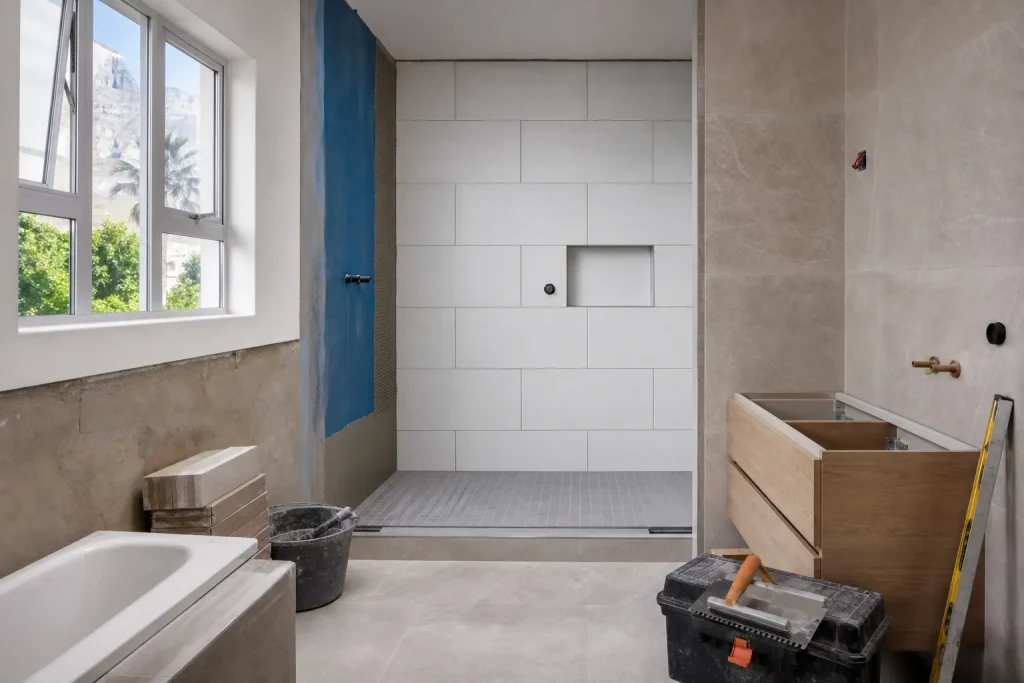
6) Who checks pressure and leak integrity before tile closure?
This should be part of the same contract with test signoff.
7) What is your defect response window?
Shorter response windows reduce risk when hidden defects appear after handover.
Plumbing sequence that reduces rework
A robust sequence is:
- Pre-site mapping and marking
- Pressure test and camera inspection
- Pipe reroute and sleeve preparation
- Rough-in and wall pass-through sealing
- Final testing after concrete and tile installation
Any plumber should be comfortable with this sequence and provide milestone reporting.
Hidden issues to request in writing
Ask for written confirmation on:
- Minimum exposure time for old pipes
- Contingency method for old hidden slab lines
- Permit or compliance needs for major pressure changes
- Clean-up of cut pipes and temporary bypass points
Combined checks for kitchen and bathroom renovations
If your quote includes both wet areas and kitchens, request combined schedule planning:
- Vent stack pressure flow before benchwork
- Floor waste and slope checks
- Waterproofing tie points around islands, benches, and enclosures
Related planning guidance
Keep these open while planning:
- How much bathroom renovation costs in Cape Town
- How to prevent recurring leaks
- Renovation handover checklist
- Plumber coordination delays guide
Contract language that protects you
Avoid vague clauses like “work as required”. Use milestone terms:
- scope boundaries
- testing method
- exclusion list
- defect correction periods
This makes accountability simple at handover.
Common red flags
Watch for these signs early:

- No written diagnostic photos
- No test values shared in the quote
- No written timeline for fittings and material delivery
- Refusal to define workmanship standards
FAQ
Should I use a separate plumber or bundled quote?
For complex projects, separate specialist plumbers can be better if their coordination is clearly managed.
What if pipe runs are in poor condition?
Request phased replacement plan before closing finishes.
Can low-pressure systems hide future failures?
Yes. Pressure tests should reflect both initial and peak conditions.
Is it normal to need multiple visits?
Yes, but each visit should be planned and documented.
How often should tests be repeated?
Before tile closure and before final handover.
Ask for a room-by-room plumbing scope
The scope should identify every fitting that is removed, retained, moved or added. It should distinguish water supply, waste, hot-water connections, isolation valves and any work outside the room. If cabinetry, appliances or sanitaryware depend on exact connection positions, confirm who supplies the dimensions and who checks them before walls or floors close.
Ask what is excluded. Chasing and making good, core drilling, rubble removal, leak detection, access panels and repairs to adjacent finishes are common sources of disagreement. Clear exclusions allow the builder and plumber to coordinate those tasks instead of discovering a gap during installation.
Confirm compatibility before buying fittings
Product appearance does not confirm that it suits the available water pressure, hot-water system, wall depth or waste route. Give the plumber specifications before ordering concealed mixers, wall-hung components, large shower heads or specialised appliances. Returns become difficult once packaging is opened or installation has started.

For owner-supplied items, record who checks delivery and damage, stores the products and handles warranty claims. Also confirm whether required valves, connectors, traps and mounting components are included in the box or must be purchased separately.
Agree the testing and evidence
Ask how new and altered pipework will be tested before it is concealed. The method should suit the work and be completed before tiling, cabinetry or ceilings make access difficult. Request photographs of concealed routes and valve locations for the homeowner file.
At handover, operate every tap, mixer, toilet, appliance connection and outlet. Check hot and cold orientation, drainage, leaks under load, accessible isolation and neat sealing at penetrations. A slow drip may not appear during a quick visual glance, so allow enough time for a practical check.
Plan for shutdowns and temporary service
Occupied homes need a clear plan for water interruptions and usable facilities. Ask when water will be off, how much notice is needed and whether the system can be restored at the end of each day. Where only one bathroom is available, sequencing may be more important than pure speed.
Confirm the response process if a leak or blockage appears after handover: who to contact, what evidence to send and what is covered by workmanship versus a product warranty. Keep invoices and product documentation together so responsibility can be resolved quickly.
Coordinate plumbing with the whole renovation
Use the bathroom cost breakdown to compare complete scopes and the delay-management guide to coordinate trades and decisions. Before final payment, work through the renovation handover checklist. For an on-site scope, request a quotation.
Information to give the plumber
Provide the latest layout, product specifications, appliance requirements and the builder’s programme. Identify which fittings are staying and whether the home remains occupied. Show known isolation points, previous leak areas and any records of concealed services. Better input allows a more useful scope and reduces allowances based on guesswork.
Information to receive in return
Ask for a written quotation, start requirements, expected shutdowns, testing method, exclusions and the person responsible for supervision. The plumber should flag products that cannot be confirmed until opening-up. At completion, collect invoices, relevant product information, test or compliance documentation appropriate to the work, and photographs of concealed alterations.
Red flags to clarify before appointment
Be cautious when the scope has no inspection allowance, product details are ignored, testing is not described, or making good is assumed to belong to somebody else. A price that covers only visible fittings may omit much of the work needed to connect them safely and neatly.
Also clarify who may instruct extra work. The plumber should not proceed with a costly change based on an informal request from someone without authority. A written variation protects the plumber, builder and owner by recording why the work changed and what it will cost.
Finally, verify availability against the building programme. A good plumber who cannot attend the rough-in, test and final-fit stages at the required times can still delay the whole renovation.
Ask who will return for final commissioning after cabinetry, tiling and fittings are complete. Splitting rough-in and final-fit responsibilities between different teams can leave leaks, alignment problems or missing connections with no clear owner.
We cover the building side of wet rooms on our bathroom renovations and kitchen renovations pages.