Before you demolish a house, an outbuilding or even part of a building in Cape Town, you need a demolition permit from the City, and if the structure is older than 60 years you may also need a heritage permit first. You also need to have the property checked for asbestos, get services like electricity, water and gas safely disconnected, warn your neighbours, and plan for the rubble. Missing any of these can stop the job, bring fines, or cause real harm. This demolition checklist takes you through each step in the order it usually happens.
Demolition Checklist for Cape Town Homeowners
Here is the short version. The sections below explain each item.
- Confirm what you want to demolish and why: full house, part of a building, outbuilding or internal walls.
- Check the age of the structure and whether it is in a heritage area.
- Get a heritage permit from Heritage Western Cape, or confirm an exemption, if the building is over 60 years old.
- Have an asbestos survey done on any building from before 2008.
- Apply to the City for a demolition permit.
- Arrange disconnection of electricity, water, gas and other services.
- Talk to your neighbours and plan site safety.
- Plan rubble removal, recycling and waste disposal.
- Give the building inspector notice at least 10 days before demolition starts.
- Have your building plans for the new work ready, so the site does not sit empty.
Do You Need a Demolition Permit in Cape Town?
In nearly all cases, yes. The City of Cape Town states that you will need a permit from your local development management district office to carry out demolition work, and the City’s demolition application is made in terms of regulation E1 of the National Building Regulations. This applies to complete houses, outbuildings and partial demolition.
The registered owner applies using the City’s demolition permit application form (BDM 07), or nominates an authorised person to act on their behalf. Applications go through the City’s online e-Services system. If demolition is part of a bigger project, the demolition application usually goes in with your building plans. Our guide to building plans approval in Cape Town explains that side of the process.
Notice before demolition starts
Once the permit is granted, the owner or authorised person must submit a Notice of Intention to Commence Demolition (form BDM 10). The City requires this notice to reach the district building inspector at least 10 days before the demolition date stated on it.
Demolishing internal walls
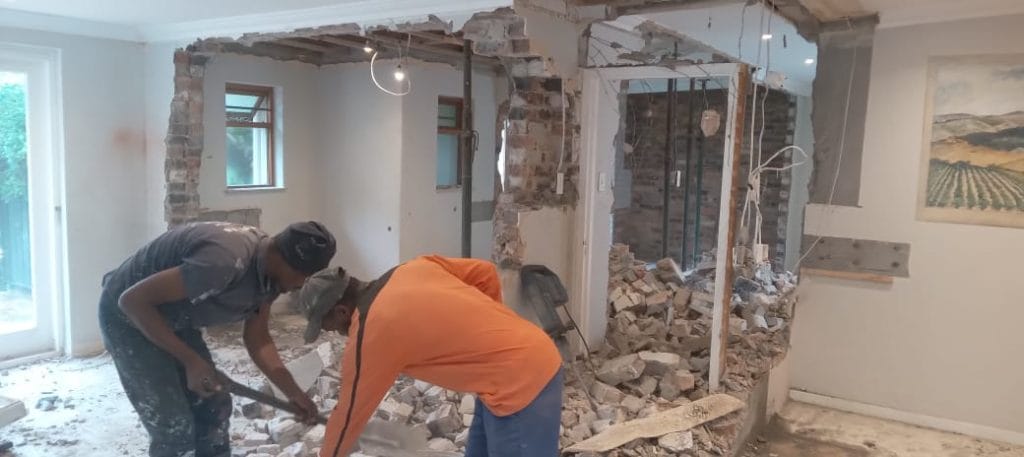
Taking out an internal wall is a form of partial demolition. If the wall is load bearing, it is structural work that needs an engineer’s design and approved plans. Even non-structural walls can affect plumbing, wiring and fire separation. Check before you start swinging a hammer.
Heritage Rules for Demolition: The 60-Year Rule Under the NHRA
Section 34 of the National Heritage Resources Act protects structures older than 60 years. Anyone who wants to alter or demolish a structure, or part of a structure, older than 60 years must first get a permit from the provincial heritage authority, which in our province is Heritage Western Cape (HWC). The City will not consider a demolition application where the Act is triggered without the required HWC permit.
A large share of Cape Town’s housing is now over 60 years old: anything built before the mid-1960s qualifies, which covers much of the older southern suburbs, the Atlantic seaboard, Woodstock, Observatory, the False Bay villages and many northern suburbs homes.
Exemption from a heritage permit before demolition
There is a useful exemption. In April 2025, Heritage Western Cape accepted the City of Cape Town’s heritage inventory as an adequate survey of conservation worthiness. Structures older than 60 years that the City’s survey identifies as not having heritage significance are exempt from needing a section 34 permit. HWC does not issue individual exemption letters, so you must check your property’s grading with the City (it can be looked up on the City’s online map viewer) and confirm it with the City if you are unsure.
Demolition in Heritage Protection Overlay zones
Separately, many Cape Town neighbourhoods fall within a Heritage Protection Overlay zone under the City’s Municipal Planning By-law. In these areas, alterations and demolition need the City’s approval regardless of the building’s age. If your property is in an overlay zone, expect a longer process and plan for it.
Asbestos Survey Before Demolition
Any building from before 2008 may contain asbestos, typically in cement roof sheets, ceilings, gutters, downpipes, fascias and old pipes. Demolition is exactly the activity that releases asbestos fibres, so this check is not optional.
The City’s guidance is clear: if asbestos is identified, demolition may not begin without following the asbestos regulations. The asbestos must be identified by an approved inspection authority and removed by a registered asbestos contractor before the rest of the building comes down. Under the Asbestos Abatement Regulations 2020, the Department of Employment and Labour must be notified in writing at least seven days before asbestos work starts, and the City’s guidance also requires a written plan of work to be approved before demolition begins. Around The House does not remove asbestos. A registered asbestos contractor must do that part, and we can carry on with the building work once the site has been cleared. If you are not sure whether a building contains asbestos, treat it as if it does until a sample has been tested.
Disconnecting Services Before Demolition
Live services are one of the most dangerous parts of demolition. Before any structure comes down, arrange for:
- Electricity: disconnection or a temporary site supply through the City (or Eskom, depending on your supply area). Do not rely on switching off at the board.
- Water: close off and cap the supply to the structure being demolished, keeping a builder’s water point if needed.
- Sewer and stormwater: cap drains so rubble and soil do not go into the municipal system.
- Gas: have gas lines and bottles removed and the installation made safe by a registered gas installer.
- Telecoms, fibre, alarms and solar: remove or relocate equipment and cabling.
Licensed electricians and plumbers should do and certify this work. We do not issue electrical or plumbing certificates ourselves.
Neighbours and Safety During Demolition
Demolition is noisy, dusty and can affect the properties next door. A few things make it go more smoothly:
- Speak to neighbours before you start and give them the dates and working hours.
- Photograph shared boundary walls and neighbouring structures before work begins, so there is a clear record if a dispute arises.
- Fence or hoard the site and keep the public away from the work area.
- Control dust by damping down, especially in the south-easter.
- Plan access for trucks and skips, and check whether you need City permission to place a skip on the road or pavement.
Demolition Waste and Rubble Removal
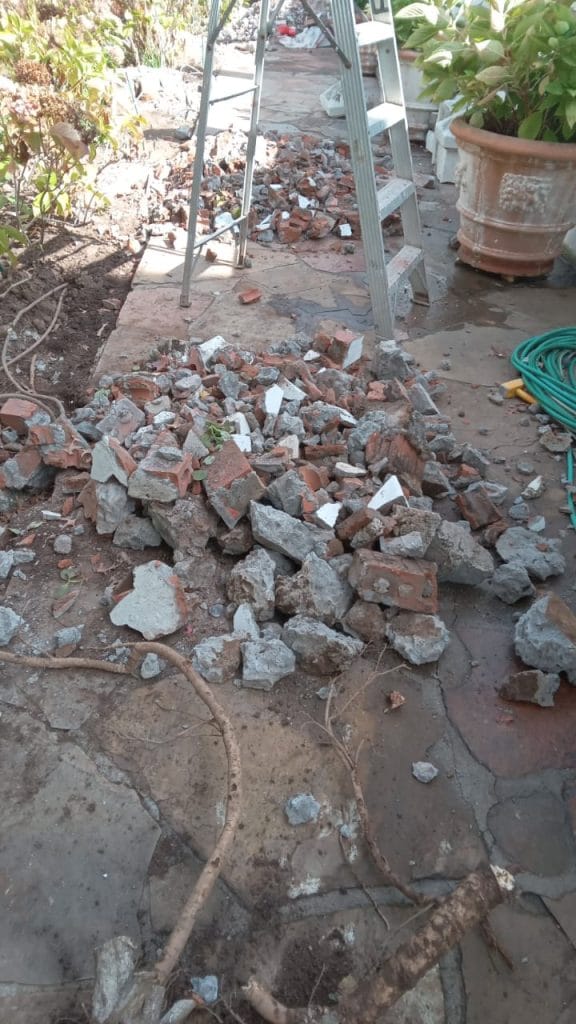
A full house demolition produces a lot of material. Much of it can be recycled: bricks, roof tiles, timber, steel and clean rubble can often be reused or taken to recycling sites, which can bring disposal costs down. Mixed building waste must go to an appropriate disposal site, not be dumped. The City has a separate Integrated Waste Management Plan application for building waste generators doing demolition, so ask whether your project needs one. Asbestos waste is hazardous and must go to a designated hazardous waste facility through the registered contractor.
Plan What Comes Next Before You Demolish
One of the most expensive mistakes we see is demolishing before the new plans are approved. An empty or half-demolished site cannot be built on until approval comes through, and that can take months. Ideally, have your new building plans approved, your builder appointed and your budget set before the demolition starts. If you are still deciding whether to knock down or keep the existing house, read our renovate or rebuild guide first.
Demolition in Cape Town: Common Questions
How long does a demolition permit take in Cape Town?
It depends on the district office, whether heritage approval is needed and whether asbestos is present. A straightforward application with no heritage or asbestos issues is much quicker than one needing a Heritage Western Cape permit. Then allow for the 10-day notice to the building inspector before work starts.
Do I need permission to demolish an old outbuilding?
Yes, in nearly all cases you need a City demolition permit. If the outbuilding is over 60 years old, check whether a heritage permit or the City exemption applies.
What happens if I demolish without a permit?
The City can stop the work and take action against the owner, and demolishing a protected structure without a heritage permit is an offence under the National Heritage Resources Act. It can also delay approval of your new plans.
Does Around The House do demolition?
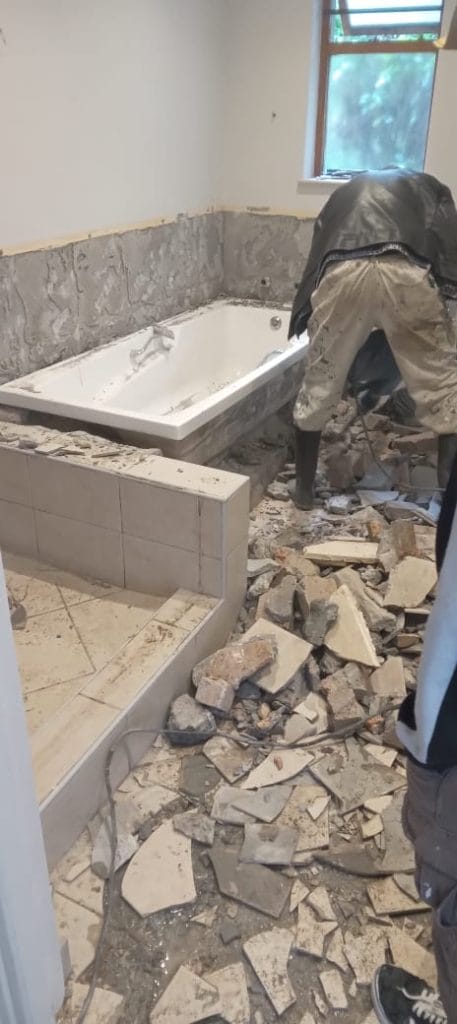
We do demolition and strip-out as part of renovation and extension projects, working from approved plans and permits. We do not remove asbestos; that must be done by a registered asbestos contractor first.
If you are planning a renovation that involves demolition, see our residential renovations page or request a quote and our team will talk you through the sequence.