Asbestos is still found in many South African homes built before 2008, mostly in fibre-cement roof sheets, ceilings, gutters, downpipes and old water pipes. In good condition and left alone, it poses little risk. The danger comes when it is cut, drilled, broken, sanded or high-pressure cleaned, because that releases fibres that can cause asbestosis, lung cancer and mesothelioma decades later. South African law, through the Asbestos Abatement Regulations 2020, controls how asbestos may be handled, and most removal work must be done by a registered asbestos contractor. If you suspect asbestos in your home, do not disturb it: have it identified, then get it removed or managed by the right people. This guide explains the health effects, where asbestos hides, what the law says and what homeowners should do.
Why Asbestos Is Still in South African Homes
For much of the 20th century, South Africa mined and used asbestos widely. Asbestos cement was cheap, strong, fire resistant and weatherproof, so it went into roof sheets, ceilings, gutters, pipes and outbuildings across the country. South Africa banned the use, manufacturing, import and export of asbestos and asbestos-containing materials in March 2008, under regulations made in terms of the Environment Conservation Act.
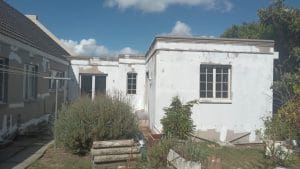
The ban stopped new asbestos going in, but it did not require existing material to be removed. That is why homes built before the ban, and especially those from the 1950s to the 1980s, can still contain it. Many Cape Town homes, outbuildings, garages and carports from that era have at least some asbestos cement.
Health Effects of Asbestos in Homes
Asbestos is made of tiny fibres. When asbestos material is damaged, these fibres become airborne and can be breathed in, where they lodge in the lungs and the lining around them. The body cannot easily clear them. The diseases linked to asbestos exposure include:
- Asbestosis: scarring of the lung tissue, causing breathlessness that worsens over time. It is usually linked to heavy or prolonged exposure.
- Lung cancer: the risk rises with exposure, and smoking greatly increases it further.
- Mesothelioma: a cancer of the lining of the lungs or abdomen that is strongly associated with asbestos.
- Pleural disease: thickening and plaques on the lining of the lungs.
The key point for homeowners is the long delay. These diseases typically appear decades after exposure, often 20 to 40 years or more. Someone who cut asbestos sheets without protection in their thirties may only become ill in retirement. There is no way to “feel” exposure at the time, which is why prevention matters so much.
Is asbestos dangerous if I leave it alone?
Asbestos cement that is intact, painted or sealed, and not being worked on releases very few fibres. The risk rises sharply when it is weathered and crumbling, broken in a storm, or disturbed during building work. That is why most of the danger in homes comes from renovations, DIY and demolition.
Where Asbestos Hides in South African Homes
You cannot confirm asbestos by looking at it; only laboratory testing of a sample can. But these are the places it is most often found in older homes:
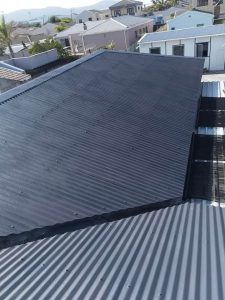
- Roof sheets: grey corrugated or broad-profile fibre-cement roofs on houses, garages, carports, outbuildings and patios.
- Ceilings: flat fibre-cement ceiling boards, often with cover strips, and some textured ceiling finishes.
- Gutters and downpipes: grey cement gutters and pipes, common on older homes.
- Fascias, eaves and soffits: cement boards under the roof overhang.
- Water and sewer pipes: older underground pipes and some vent pipes.
- Wall cladding and partitions: cement panels on outbuildings, Wendy houses and internal partitions.
- Other items: old flue pipes, water tanks, window sills, vinyl floor tiles and their adhesives, and insulation around old geysers or boilers.
Fibre-cement products made after the ban look very similar but do not contain asbestos. Age is the best clue: if your house or outbuilding was built before 2008 and has these materials, treat them as possibly containing asbestos until a test says otherwise.
What the Law Says: Asbestos Abatement Regulations 2020
The Asbestos Abatement Regulations 2020, made under the Occupational Health and Safety Act, replaced the older Asbestos Regulations of 2001. They set out who may do asbestos work, how it must be notified and how waste must be handled. Here is what matters for homeowners, in plain terms.
Three types of asbestos work
- Type 1: painting asbestos cement without any surface preparation, or removing less than 10 square metres of asbestos cement products (or equivalent gutters and piping, or insulating board), where removal is not repeated on the same site within six months. This does not need a registered contractor, but the provincial office of the Department of Employment and Labour must still be notified in writing at least seven days before the work starts.
- Type 2: repairing or encapsulating asbestos cement without surface preparation, or removing asbestos cement products or insulating board beyond the type 1 limits. This must be done by a type 2 registered asbestos contractor.
- Type 3: removal, repair or encapsulation of any asbestos-containing material, including the more hazardous forms. This must be done by a type 3 registered asbestos contractor.
For type 2 and type 3 work, the Department must be notified in writing at least seven days before work begins. The regulations also cover air monitoring, protective equipment, labelling, and a clearance certificate once the work is done.
You are the “asbestos client”
The regulations define an asbestos client as any person for whom asbestos work is done. If you hire someone to remove asbestos from your home, you are the asbestos client, and the regulations place duties on you too, including making sure the work is done by the right type of contractor. Hiring an unregistered person to remove a whole asbestos roof is not only dangerous, it is not legal.
Disposal
Asbestos waste is hazardous waste. In Cape Town it must be sealed in suitable containers and taken to a designated hazardous waste facility. It may not go in your wheelie bin, a skip or a builder’s rubble load. A registered contractor will handle the disposal and can give you proof that it went to the right place.
What Homeowners Should Do About Asbestos
- Do not disturb it. No cutting, drilling, sanding, breaking or high-pressure cleaning of suspect material. Do not walk on old cement roof sheets; they are brittle as well as hazardous.
- Get it identified. Ask a registered asbestos contractor or an approved inspection authority to sample and confirm it. The Department of Employment and Labour’s Western Cape office can provide lists of approved inspection authorities and registered contractors.
- Decide: manage or remove. Sound, sealed asbestos can sometimes be left in place and monitored. Damaged material, or material in the way of planned building work, should be removed by a registered contractor.
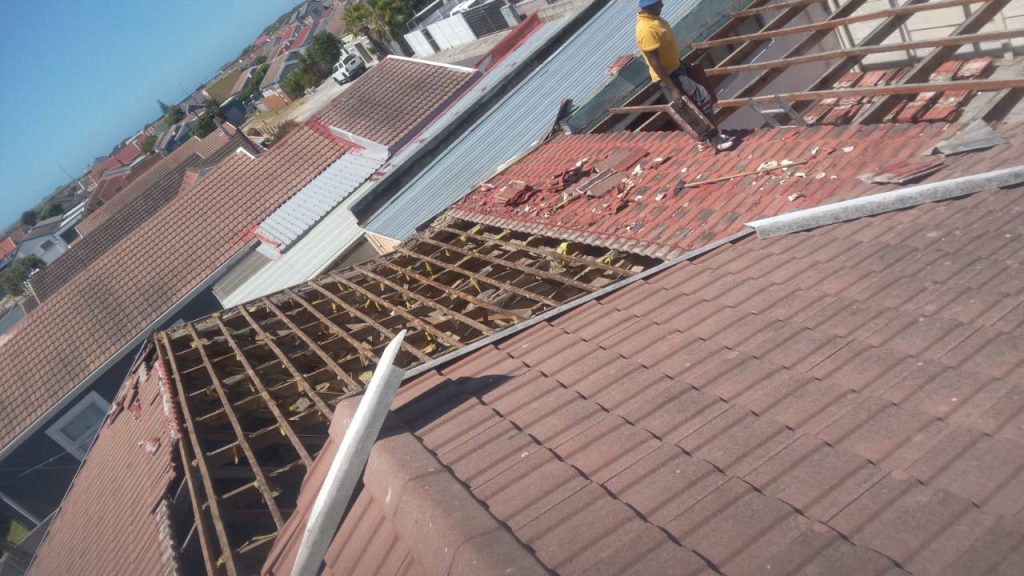
- Plan your renovation around it. If you are re-roofing, extending or demolishing, deal with the asbestos first. The rest of the work can follow once the area has been cleared.
- Keep the paperwork. Keep the test results, the contractor’s registration details and the clearance and disposal records. Buyers and their bond originators may ask.
How Asbestos Affects Your Renovation Plans
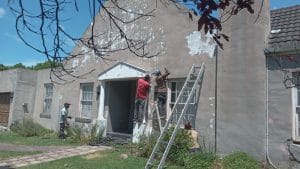
Asbestos is common on older Cape Town homes during roofing and renovation work, especially old cement roof sheets on garages and back rooms, and old gutters and downpipes. Around The House does not remove asbestos. That work belongs to a registered asbestos contractor. What we do is plan the job around it: we tell you when we suspect asbestos, you appoint a registered contractor to remove it, and once the area has been cleared and handed over, our team carries on with the building work, such as a new roof, new gutters, ceilings or the extension itself.

If asbestos removal is part of a re-roof, read our guide on the best roofing material for Cape Town to choose the replacement. If you are planning bigger changes to an older house, our renovate or rebuild guide covers what to check first, and you will need to allow for asbestos costs in your contingency budget.
Asbestos in Homes: Common Questions
How do I know if my roof is asbestos?
You cannot tell for certain by looking. Grey fibre-cement roof sheets on a building from before 2008 may contain asbestos. A sample tested by a laboratory, arranged through an approved inspection authority or a registered asbestos contractor, is the only reliable way to know.
Can I remove an asbestos roof myself in South Africa?
Removing less than 10 square metres of asbestos cement is classed as type 1 work and still needs written notification to the Department of Employment and Labour seven days beforehand, plus proper controls. Anything larger, such as a full roof, must be done by a registered asbestos contractor. For safety, we recommend using a registered contractor for any removal.
Is it safe to paint over asbestos roof sheets?
Painting asbestos cement without any surface preparation is type 1 work under the regulations. Scraping, sanding, wire brushing or pressure washing the sheets first is not allowed, because it releases fibres.
Can I sell a house with asbestos in South Africa?
Yes, asbestos does not stop a sale, but you should disclose any known asbestos to buyers. Many buyers will ask for it to be removed or will factor removal into their offer.
If you are planning work on an older home and want to understand what needs to happen first, request a quote and we will look at the building work side and tell you if a registered asbestos contractor needs to come in before us.